Texecom Ricochet Wireless Alarm Systems: Advanced Mesh Technology for Reliable Property Security
Protecting homes and commercial premises requires a security system that combines dependable detection, reliable communication and straightforward everyday operation. As intruder alarm technology has developed, wireless systems have become increasingly attractive to property owners who want comprehensive protection without the disruption associated with extensive cabling. Modern professional alarm equipment can offer sophisticated detection, flexible installation and advanced communication features, making it suitable for a wide variety of residential and commercial environments.
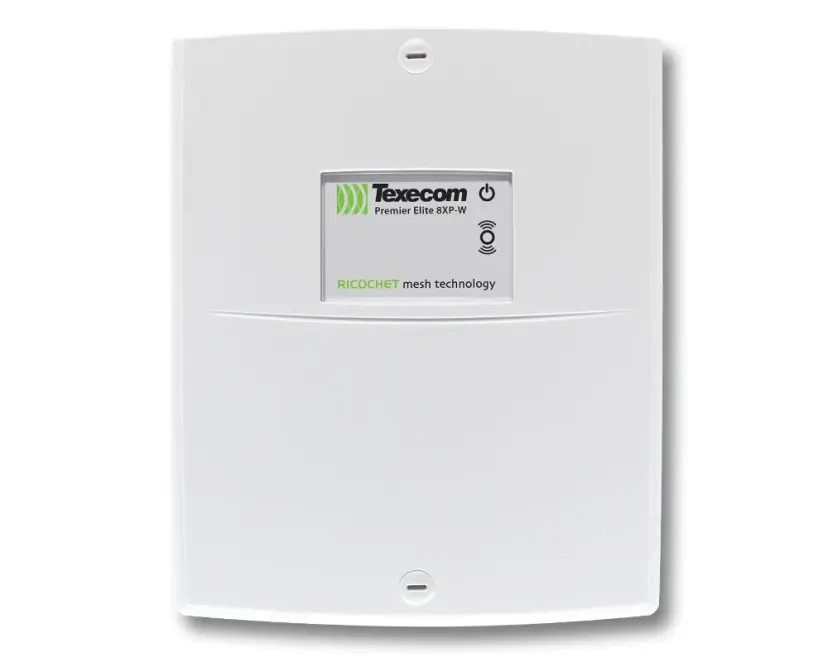
For property owners considering Texecom Ricochet Wireless Alarm Systems, one of the most important distinguishing features is the technology used to connect individual security devices. Developed by British security manufacturer Texecom, Ricochet uses wireless mesh networking to support communication between compatible detectors and the alarm system. Unlike conventional point-to-point wireless arrangements, where each sensor communicates directly with a central receiver, Ricochet-enabled devices can relay messages through other compatible devices. This approach provides additional communication pathways and can improve coverage across properties where building layout or construction materials make wireless signalling more challenging.
Texecom has established a strong presence within the UK professional security market, supplying intruder alarm equipment used in domestic and commercial installations. Its Premier Elite alarm platform supports a range of wired and wireless security devices, allowing installers to design systems around the requirements of individual properties. Ricochet wireless technology forms an important part of this approach, enabling compatible detectors and accessories to communicate through a managed mesh arrangement rather than relying exclusively on direct connections.
The main advantage of mesh networking becomes apparent when considering how wireless signals travel through buildings. In a traditional wireless arrangement, a detector positioned a considerable distance from the receiver may experience reduced signal quality because of thick walls, floors or other obstacles. Ricochet technology allows compatible devices to repeat communications, creating alternative pathways through the installation. If a particular communication route becomes less effective, the system can automatically select another available route. Texecom describes this capability as self-healing mesh technology, designed to maintain dependable communication as signal conditions change.
Texecom
This functionality can be particularly useful in larger houses, converted properties and commercial premises containing multiple rooms or substantial internal walls. Older buildings constructed with dense masonry may present difficulties for conventional wireless equipment, while metal structures and other materials can influence radio performance. Mesh networking provides greater installation flexibility by allowing compatible devices to support communication across the system. However, reliable performance still depends on appropriate equipment positioning, sufficient network coverage and professional commissioning.
One of the practical benefits of Texecom Ricochet Wireless Alarm Systems is the reduced requirement for cabling between detectors and the central alarm equipment. Installing a traditional wired alarm can involve routing cables through ceilings, walls and floor voids, which may create additional labour and require making good afterwards. Wireless detectors can often be fitted with considerably less disruption, particularly in finished homes where preserving decoration is important. This makes Ricochet technology attractive for period properties, renovated houses and commercial environments where minimising installation work is a priority.
Although wireless installation reduces cabling requirements, it does not mean that every component operates without a physical power connection. Alarm control panels, certain communication devices and external equipment may still require suitable electrical supplies or other connections. The exact arrangement depends on the selected Premier Elite panel, compatible accessories and the installation design. A professional installer can assess these requirements and determine the most appropriate configuration for the building.
Ricochet technology is closely associated with Texecom's Premier Elite range of control panels. These panels provide the central processing and management functions required for an intruder alarm installation, including monitoring connected detectors, controlling alarm outputs and managing user access. Different Premier Elite models support different numbers of zones, areas and compatible accessories, allowing the system to be adapted to properties of varying sizes. Some configurations incorporate wireless capability directly, while others can use compatible wireless expanders to add Ricochet functionality.
This flexibility can be particularly useful where a property already has a suitable Texecom alarm installation. Depending on the control panel, firmware and available expansion options, it may be possible to introduce compatible wireless detectors without replacing every existing wired component. A hybrid arrangement can combine wired sensors in established locations with wireless devices in newly protected areas. However, compatibility must be verified carefully because not every Texecom panel, expander or wireless accessory supports every available function.
Wireless motion detectors form an important part of many Ricochet installations. Passive infrared detectors are designed to identify movement through changes in infrared radiation within their monitored area. These devices are commonly positioned in hallways, living rooms, offices and other locations where an intruder might travel after entering the property. Correct positioning is essential because the effectiveness of a detector depends on its coverage pattern, mounting height and surrounding environment.
Texecom's compatible wireless detection range includes different products for particular applications, with some incorporating additional detection technologies. Dual-technology detectors, for example, can combine passive infrared sensing with microwave detection to provide an alternative approach to identifying movement. The suitability of a particular detector depends on the room, environmental conditions and required security performance. Rather than installing the same sensor throughout a property, an experienced installer can select equipment according to the characteristics of each protected area.
Door and window contacts provide another important layer of protection within Texecom Ricochet Wireless Alarm Systems. These devices monitor the status of selected openings and can report when a protected door or window is opened while the relevant alarm setting is active. Magnetic contacts are particularly useful for external doors, patio entrances and accessible windows because they can provide perimeter detection before movement occurs deeper inside the building. When combined with internal motion detectors, they contribute to a more comprehensive security arrangement.
Some Ricochet-compatible devices also incorporate shock detection, which can identify selected vibrations or impacts affecting protected doors and windows. These sensors offer an additional approach to perimeter security by responding to particular physical disturbances rather than relying exclusively on the opening of a contact. However, correct sensitivity settings and positioning are important to reduce unwanted activations caused by normal building movement or environmental conditions. The appropriate combination of detection technologies should reflect the property's construction and assessed risk.
One of the advantages of using a professional alarm platform is the ability to establish different security settings for different circumstances. A household may require full protection when everyone leaves the property but prefer a reduced arrangement during the evening or overnight. Depending on the panel configuration, selected areas or zones can be included in different setting programmes. This can allow perimeter protection to remain active while occupants move around designated internal spaces, although the precise configuration must be designed around the building and everyday usage.
Reliable communication remains central to the performance of Ricochet technology. Texecom's mesh system provides alternative signalling routes, but it is still important to establish that every detector has suitable connectivity. The manufacturer provides diagnostic facilities that allow installers to review wireless signal performance and communication routing. These tools can help identify weak locations, assess alternative paths and determine whether additional devices or adjustments are required. Proper testing during commissioning is essential because a detector that appears satisfactory in one position may behave differently after building alterations or changes to the surrounding environment.
Texecom also provides a signal security assessment that considers available communication routes rather than examining signal strength alone. This reflects one of the important characteristics of a mesh system: communication resilience can depend on the availability of alternative paths. A detector with more than one suitable route may continue communicating if conditions affecting its original pathway change. The manufacturer's diagnostic facilities can help installers evaluate these arrangements and improve the reliability of the completed installation.
Texecom
Security of wireless communication is another consideration. Ricochet technology incorporates encrypted wireless signalling intended to protect information exchanged between compatible devices. This provides an important layer of protection, although encryption should be considered alongside other features such as system supervision, tamper detection and appropriate configuration. The security of the overall installation also depends on the control panel, communication equipment, user credentials and maintenance arrangements.
For many homeowners, remote access has become an increasingly desirable feature of modern alarm systems. Compatible Texecom Premier Elite installations can support connected functionality through suitable communication equipment and services, allowing users to interact with their alarm through supported mobile applications. Depending on the system configuration and available services, this may include checking alarm status, receiving notifications or controlling certain functions remotely. These capabilities should not be assumed to be included with every Ricochet product because wireless detection technology and internet-based remote access are separate parts of the overall system.
A professionally designed installation may also incorporate monitoring arrangements where alarm signals are transmitted to an external Alarm Receiving Centre. This can be useful for businesses, frequently unoccupied premises and homeowners seeking a managed response to security events. Monitoring services generally involve additional communication equipment, service agreements and ongoing charges. Property owners should establish the available response procedures and any relevant requirements before selecting this option.
For installations where police response is required, the alarm must meet applicable UK security standards and the requirements of the relevant police force. Depending on the arrangement, this may involve recognised alarm confirmation methods, appropriate monitoring and installation by an approved security company. Consumers should discuss these requirements with a qualified installer, particularly where their insurer specifies a particular alarm grade or monitoring service.
Another important consideration when choosing Texecom Ricochet Wireless Alarm Systems is battery maintenance. Wireless detectors typically rely on internal batteries, allowing them to operate without individual power cables. Battery life depends on the particular device, operating conditions and usage patterns. While manufacturers may provide expected service-life estimates, actual replacement intervals can vary. Routine maintenance should therefore include checking battery status and responding promptly to low-battery warnings.
The control panel and associated communication equipment may also require backup power arrangements. In the event of a temporary mains failure, suitable backup batteries can help maintain essential alarm functions for a defined period. However, remote communications may depend on the availability of broadband, cellular connectivity or other transmission routes. A complete security assessment should consider how the system behaves during power interruptions and communication failures rather than assuming that wireless detectors alone guarantee uninterrupted protection.
Property owners should also consider the importance of regular servicing. A professional alarm system is not simply installed and forgotten, because environmental conditions, batteries, building layouts and security requirements can change. Periodic maintenance helps confirm that detectors communicate correctly, the control panel responds as expected and warning devices remain operational. Servicing can also identify damaged equipment, reduced battery performance or changes that affect detection coverage.
False alarms are another area where appropriate installation and maintenance make a considerable difference. Unwanted activations may occur when detectors are positioned incorrectly, settings are unsuitable or equipment develops faults. Professional commissioning can help reduce these issues by ensuring that each device is appropriate for its location and configured correctly. In properties with pets, the choice and placement of movement detectors require particular attention, as animal activity can affect some detection systems.
Commercial premises often present more demanding security requirements than ordinary residential properties. Offices, warehouses, workshops and retail units may contain valuable equipment, stock or sensitive business materials. These buildings can also have extensive internal layouts, multiple access points and areas that are occupied at different times. Ricochet's mesh architecture can be useful in such environments because compatible devices can support communication across a broader installation. However, the appropriate system design depends on the building, equipment compatibility and required security grade.
For domestic applications, Texecom Ricochet Wireless Alarm Systems may be particularly attractive where homeowners want professional security equipment without extensive alteration to their property. Detached houses, larger family homes and properties with extensions can benefit from a system designed around multiple access points and internal spaces. Wireless technology may also make it easier to add compatible detectors when security requirements change, provided the installation remains within the capabilities of the selected control panel and wireless infrastructure.
When comparing Texecom equipment with other wireless alarm brands, consumers should consider more than the initial price of the control panel and detectors. System expandability, communication reliability, available detection devices, monitoring compatibility and professional support can all influence long-term value. A less expensive alarm may be sufficient for a simple property, while a more capable professional platform may provide advantages where the building has more complex security requirements.
Installation costs will also vary according to the number of sensors, the size of the property and the level of protection required. A straightforward domestic installation may involve several motion detectors, door contacts and an external sounder, while a larger property could require additional zones, specialist detectors or communication equipment. A professional security survey can help establish an appropriate design and avoid unnecessary equipment purchases.
One of the strongest arguments for professional installation is the opportunity to assess the entire property rather than concentrating exclusively on individual products. Security effectiveness depends on identifying vulnerable entrances, selecting appropriate detection methods and establishing reliable communication throughout the building. The installer can also explain everyday operation, maintenance requirements and the response arrangements available if the alarm activates.
It is worth remembering that intruder alarms are most effective when combined with suitable physical security. Strong external doors, appropriate locks, secure windows and sensible exterior lighting can help reduce opportunities for unauthorised entry. An alarm provides detection and notification, but it does not physically prevent somebody from entering a building. Combining these measures creates a more comprehensive approach to property protection.
The long-term suitability of a wireless alarm also depends on manufacturer support and access to compatible replacement equipment. As electronic security products develop, individual devices and control panels may be updated or discontinued. Property owners should consider the availability of servicing, replacement batteries, compatible detectors and firmware support when selecting a system. Using a professional platform with an established installer base can provide practical advantages, although future compatibility should always be checked rather than assumed.
For homeowners and businesses considering Texecom Ricochet Wireless Alarm Systems, the key distinction is the combination of professional alarm functionality with a wireless mesh communication architecture. Ricochet's ability to relay messages between compatible devices and automatically adjust communication routes can provide valuable flexibility in buildings where traditional wireless signalling may be challenging. However, reliable protection still requires correct system design, compatible equipment, appropriate installation and ongoing maintenance.
Selecting the right security system should therefore begin with an assessment of the property rather than a comparison of headline product features alone. A small home may require a relatively straightforward arrangement, while a larger building could benefit from additional detection zones, specialist sensors and professional monitoring. Understanding these requirements allows property owners to choose equipment that offers suitable protection without unnecessary complexity or expenditure.
Texecom Ricochet Wireless Alarm Systems represent a practical option for properties requiring adaptable wireless security supported by professional alarm technology. Their mesh networking capabilities, compatibility with suitable Premier Elite equipment and range of detection options can make them attractive for both domestic and commercial applications. By prioritising communication reliability, correct detector placement, system compatibility and appropriate maintenance, property owners can develop a dependable security arrangement that remains suitable as their requirements change.